Friday, 25 February 2011

Giving to Charity

I have always enjoyed giving to charity, I have direct debits set up on my bank account to give to a couple of charities each month and was Charities Captain of my high school, leading a team to raise thousands of pounds. What I had never before considered was why I give my time and money to charitable causes.  It was always something I just did, and my logic was always "I would spend that much on a hot chocolate, I would spend triple that on a t-shirt..." This implies that a little bit of money to me could offer somebody less fortunate a lot more than it was worth to me. I liked being able to help.

While researching the reasons why people gave to charity, I also discovered that I also like being seen as charitable. People perceive charitable people well and I suppose it's an ego thing, all about personality and self concept.

The reasons why I give to charity:
  1. It makes me feel good.
  2. I like to be perceived as being a charitable and nice person.
  3. A genuine desire to help.

The list of reasons why people donate to charity is extensive. Ironically, charitable giving is fundamentally a selfish act.
Like me, some people like to be viewed as kind, this is about self image which doesn't really have much to do with wanting to help a charity.Using the same logic, giving to charity to alleviate guilt, for tax benefits, because of social pressure, to impress the opposite sex, or as a religious obligation don't really suggest a person is naturallly generous and charitable.
In contrast, a large number of people donate to charity out of simple goodwill or, as with many cases, they were personally affected by the charity or its cause.

More than 62% of the UK population donates more than £5 a year to charity. (TGI, 2007) Having established the main reasons why these people donate, I looked into who it was who tended to be the most generous.
As expected, women are more likely to donate to charity than men (TGI, 2007) and they tend to give to causes related to children and animals. They are also more likely to respond to humanitarian reports than men. The Daily Mail (2011) stated that 43% of women would donate to a humanitarian cause like a flood or earthquake after seeing a media appeal compared to 29% of men. However, when men donate they do it less but give larger sums of money. Men give to medical charities related to men's issues and larger, well known organisations that they know they can trust.


Dogs Trust makes videos like these to appeal for donations. By telling a story that tugs at heartstrings and has a happy ending, people will be unable to get involved with the story, namely women. They will then feel the need to help.


Men are harder to target as they don't part with their cash so easily. This advert, created to raise awareness of prostate cancer, uses cartoons (men like humour in advertising) and a simple, factual message. Men would not respond well to a heartwarming story about a man who overcame cancer, but a reminder to get checked is enough for them.

It is single women and couples with no children at home who give the most amount of money to charity.


Source: nfpSyngergy, 2007

What I found most interesting was although higher income households give a larger total sum to charity on average, lower income households were more generous. (Reason.com, 2007) People with less money tend to give a higher proportion of their income to charitable causes.

The three most popular charitable giving causes in the UK are medical, hospital and children and young people related. (Guardian, 2009) This is supported by the survery statistic from 2007 available on TGI.


Source: TGI, 2007


Cancer Research UK was the most popular charity, followed by the NSPCC and Save the Children.

The charity my team and I are fundraising for is Children with Leukaemia. See Website This charity raises money for both children and cancer, putting us in a strong position to attract donations.


Raising money in memory of Matthew Byrne. 1992 - 2009
Please give generously at our Just Giving page.


Charities are suffering because of the recession. Donations fell by 11% in 2009 (Guardian, 2009) and 52% of charities reported being affected by the recession in 2009 which is 38% higher than it was in 2008. (BBC, 2009) Over the last three years, as the economy has worsened the need for services offered by charities has risen. This puts charities in a difficult situation with a high demand for their help but limited funding to actually offer the aid required of them.

  • BBC (2009) Charity donation hit by recession. [online] Available from: http://news.bbc.co.uk/1/hi/uk/7946518.stm [Accessed 11 January 2011].
  • Daily Mail (2011) Women more like to give to disaster charity appeals than men. [online]. Available from: http://www.dailymail.co.uk/money/article-1354832/Women-likely-money-charity-appeals-men.html [Accessed 25 February 2011].
  •  Guardian (2009) Recession means people give less to charity. [online] Available from: http://www.guardian.co.uk/society/2009/sep/23/charity-donations-down [Accessed 11 January 2011].
  • Reason.com (2007) Who gives to charity. [online] Available from: http://reason.com/archives/2007/03/01/who-gives-to-charity [Accessed 20 January 2011].
  • TGI (2007) Financial services – charity. KMR Software [Accessed 20 January 2011].

Wednesday, 23 February 2011

Values

When creating an advertising campaign, marketers need to understand and respect the values of their target market. Ideally they will share values with their customers to create loyalty and trust between the brand and the consumer.
The problem with this is that the values of each individual consumer can vary so much, how can one organisation cater to so many belief systems? The best marketers can do is try to avoid offending their customers or, in fact, anybody. Unless that is their intention.

If we need to understand a person's values, it's necessary to determine exactly what values are. Solomon defines a value as "a belief about some desirable end-state that transcends specific situations and guides selection of behaviour... they do not apply in specific situations only". (Solomon et al, 2010, p198)
Translation: A value is an innate belief that we feel if we act or think in a certain way then it will help us to reach our ultimate goal.

For example, if someone acts in a kind, sincere and honest way (values) then they will be able to reach their ultimate goal (end state) of a peaceful life.
Ries and Trout aptly described why marketers should concentrate on consumer values as well as product specifications.
Ries and Trout (1982): If we believe our overall values drive our behaviour, then we should be concentrating on the important, underlying motives that drive consumers to make product or service choices rather than simply product attributes.

Kahle's List of Values (1983)
  1. self respect
  2. excitement
  3. being well respected
  4. self- fulfillment
  5. sense of accomplishment
  6. warm relationship with others
  7. security
  8. fun and enjoyment
  9. sense of belonging

The List of Values consists of nine traits that relate to differences in the way people consume. Consumers make purchase decisions based on what they want to portray themselves to be and what they believe in. (An animal rights activist would never buy goods that were tested on animals.) A marketer would target the people who value what the product or service offers. A business consultancy would most likely attract people who wanted to be well respected and feel secure. A bungee jumping company would attract people who craved excitement, fun and enjoyment. The List of Values can assist in profiling a target market. 

Maslow's Hierarchy of Need

Before the List of Values was developed, Maslow created a hierarchy of need in 1954. This hierarchy starts from the very basic human needs, travelling upwards through feeling secure and a sense of belonging to appreciating your sense of self.

This suggests that in order to reach the personal growth and fulfillment stage, an individual must first achieve each preceding step. From a marketing point of view, consumers can be targeted because of which stage they are at or trying to achieve.

Match.com - trying to get to the stage of love and belonging


Self improvement books/videos - trying to get to/ improve the stage of self actualisation


Rokeach's Value Survey

Developed in 1973 by social psychologist Milton Rokeach, the Value Survey lists possible terminal and instrumental values.

Terminal values: life goals
Instrumental values: how the life goals are achieved


For an exciting life, someone would need to be independent, courageous and imaginative. For inner harmony, someone would need to be forgiving, polite, helpful and honest. Instrumental values are how we act in order to achieve the life we want. This echoes the initial description of values:
Translation: A value is an innate belief that we feel if we act or think in a certain way then it will help us to reach our ultimate goal.

Products can also become a means to an end (like instrumental values). Why do women wear make up? To hide insecurities... to appear more attractive... to increase confidence...to enhance natural features... the list has no end. The endless possibilities of terminal values is probably what makes the make up industry so extraordinarily successful.

This can be explained by laddering.

Laddering is a projective technique which allows the identification of the relationship between functional product attributes and desired end states:
  1. Concrete Attributes
  2. Abstract Attributes
  3. Functional Consequences
  4. Psychological Consequences
  5. Instrumental Value
  6. Terminal Value
This example using apples depicts the above list well.


VALUES IN ADVERTISING

Advertisement construction=
  • message elements (the specific attributes or product features)
  • consumer benefit (positive consequences of using product, this is where instrumental values will be targetted)
  • executional framework (overall style and tone)
  • leverage point (the way the message activates the terminal value by linking it with the product features)
  • driving force (the end value)


  • Solomon, M. R., Bamossy, G.,Askegaard, S. and Hogg, M.K. (2010) Consumer behaviour:a European perspective. 4th ed. Harlow: Pearson.


Monday, 21 February 2011

Personality & Self Concept

It is sometimes difficult to distinguish between personality and self concept. Put simply, personality is the way a person presents themselves outwardly whereas self concept relates to how a person feels about themselves.

Personality is made up of the characteristic patterns of thoughts, feelings and behaviors that make a person unique. (About.com, 2011)

Self Concept is your understanding about who you believe and feel you are and what you're about. We all have a perception of how we see and feel ourselves to be. (Marvin Barrett, 2009)

Often, one person's personality and self concept can be drastically different. Below is an image of 'Brooke' from a television show. On the show, her character comes across as very confident, fashionable,  fun and beautiful. That is her personality and how she wants others to see her. The way she sees herself, however, is very different. She thinks she isn't pretty, good, smart or talented enough.


So what do personality and self concept have to do with marketing?


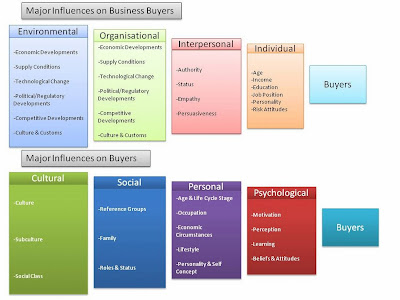
According to Kotler, the above table shows what influences buyer behaviour. Under PERSONAL comes personality and self concept, that is what will be explored in this blog.

Sometimes when selling a product or a service, the marketer is not trying to sell to a person, but the person they aspire to be.

 Selling to somebody who wants to be slimmer.
 Selling to someone who wants to appear wealthy or show their wealth.
 Selling to someone who wants to be blonde.
 Selling to someone who wants to look trendy.

Using Apple Mac as an example, they are not only targetting people who want to buy an MP3 player, they are targetting people who will want to most current, 'cool' MP3 player. Say a customer goes into a store and views two MP3 players. Both the same size, colour, memory and have the same functions but one is an iPod. There is a difference between the customer who buys the MP3 player for its functionality and cost and the customer who pays more because there is a picture of an apple on the back of their MP3 player. This comes down to self concept, who a person feels they should be.

Because of the relation between personality, self concept and marketing, theorists have come up with a number of concepts to describe personality and self image.

  • Hollander
This image depicts Hollander's Concentric Ring Theory. Hollander believed that personality could be represented by three rings; the innermost ring being the hardest to penetrate. 

PSYCHOLOGICAL CORE – the real you, the core concept of self that individuals are unwilling to reveal.
TYPICAL RESPONSES – represents how individuals are likely to respond in a situation.
ROLE-RELATED BEHAVIOUR – how an individual responds in a specific situation. This may be an uncharacteristic behaviour.

Hollander also created a theory which builds on the concentric rings.

The External Aspect: how a person interacts with other people
The Internal Aspect: a combination of their values and attitudes
The Dynamic Aspect: faced with a new situation how do they behave
THESE THREE ASPECTS TEND TO FORM THE LAST ONE.
The Consistent Aspect: their characteristic style

The Dynamic Aspect is linked closely with 'role related behaviour' from the previous theory.

It is clear from Hollander's theories that personality is made up of a person'sbeliefs and values and how that makes them interact with other people.
  • Cattel's Trait Theory of Personality

When asked to describe the personality of a friend, we would normally respond by giving a list of their friend's traits. This is how we generally understand personality and therefore  is the logic behind Cattel's Trait Theory.
In addition, a psychologist named Gordon Allport came up with a trait theory in 1936. There are of course thousands of words in the English dictionary that can describe character traits. To better analyse personality, he separated traits into three levels: 
  • "Cardinal Traits: Traits that dominate an individual’s whole life, often to the point that the person becomes known specifically for these traits. People with such personalities often become so known for these traits that their names are often synonymous with these qualities. Consider the origin and meaning of the following descriptive terms: Freudian, Machiavellian, narcissism, Don Juan, Christ-like, etc. Allport suggested that cardinal traits are rare and tend to develop later in life.
  • Central Traits: These are the general characteristics that form the basic foundations of personality. These central traits, while not as dominating as cardinal traits, are the major characteristics you might use to describe another person. Terms such as intelligent, honest, shy and anxious are considered central traits.
  • Secondary Traits: These are the traits that are sometimes related to attitudes or preferences and often appear only in certain situations or under specific circumstances. Some examples would be getting anxious when speaking to a group or impatient while waiting in line." (Cherry, 2011)
These three levels reflect Hollander's Three Concentric Rings. It is clear that a pattern is forming within each theory about personality which relates to different levels of relation to the core personality of a person which are shown in different situations.

  • Horney
Horney's theory, developed in 1945, suggests that you develop your personality as a child. As a child, you are dependent on your care givers and you will become either compliant, aggressive or detached based on the level of anxiety experienced at this stage in life.

Compliant= Going towards others. (affection/affiliation) - well loved and nurtured as a child
Aggressive= Going against others. (power/domination) - experienced abuse or intimidation as a child
Detached= Turning away from others. (isolation/indifference) - ignored as a child
  • The Big Five Scale of Personality Type 
Researchers gathered information on people with certain traits to determine five main personality categories that most people could fall into.


  •  Hidden Motives
According to Freudian theory, the mind is conflicted between pleasure seeking and social responsibility. (Solomon et al, 2010) For example, wanting to play loud music at a party while also being concerned about upsetting the neighbours. This conflicts is carried out in the mind using the following three systems:

  1. ID: This is the part of the mind that wants to maximise on pleasure and avoid pain. "It is selfish and illogical." (Solomon et al, 2010, p187)
  2. SUPEREGO: This part is the opposite if the id because it is hyper aware of society's rules. It tries to prevent the id from being successful in self pleasure seeking.
  3. EGO: This is the mediator between the id and the superego. It satisfies the id without breaking the superego's rules. 
The devil = id
The angel = superego
The person = ego

Myers- Brigg Type Indicator

Based on the theory of Carl Jung, the Myers- Brigg Type Indicator was developed to measure a person's dominant preferences for taking in information and making decisions. 

These are my results:


I agree with this analysis, but I never thought I would be in the same category as Bart Simpson!


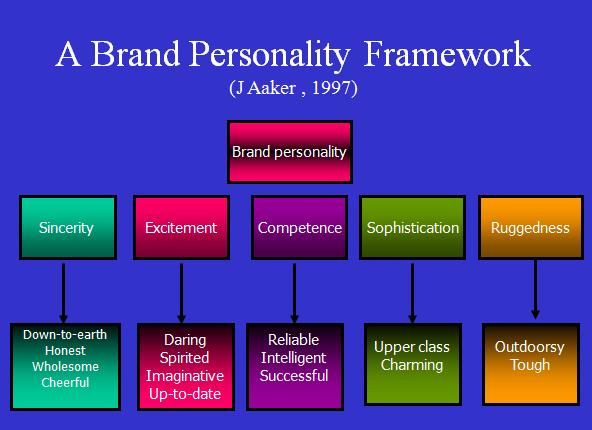
Sometimes a personality is created for a brand. This helps the brand to relate to its target market and the consumer can identify with the brand values.


For example, if Simple skincare had a personality, it would come under the sincerity label. This advert sums up why this conclusion was reached, note the wholesome, natural and honest approach to selling. "Simple says- We believe in goodness."


Personality and self image is a vital part of understanding consumer behaviour. "Consumers demonstrate consistency between their values and the things they buy. Self-image congruence models predict that products will be chosen when their attributes match some aspect of the self." (Solomon et al, 2010, p151)


Thursday, 18 November 2010

STP Marketing

Marketing is everywhere and everybody is being targeted for one product/service or another. One important thing to consider is how marketers select their target market. How do they identify a market and how do they find the right customers? This can be achieved using segmentation, targeting and postioning.

Segmentation
Targeting
Positioning

=STP

Segmentation is when marketers identify a need that a group of people have. A market can be subdivided into smaller branches; for example John Freida is a leading hair care brand and creates products for all hair types. They have noticed a customer demand for products for coloured hair and have created distinct, individual ranges for blondes, brunettes and redheads. Jacamo, a clothing website for larger sized men, has recognised the growing trend in the male population's interest in fashion but realised that most fashionable clothing was aimed at young, thin men. Jacamo segmented a larger market (men's fashion) and targeted men who need larger clothing sizes but still want to look good.

An example of John Freida's Brilliant Brunette range

Click to see a Jacamo Advert - notice the profiling!!

Segmenting is often done by 'profiling'. A brand can create the ideal customer and base their advertising campaigns around what this fictional character wants and does. Say Dior has produced a new perfume for ladies, targeting sophiscated, fashion conscious businesswomen. Their profile could be called Alexa, she's the Vice President of a large production company. Her Dior suits are always perfectly tailored and she frequents only the most exclusive bars and clubs in London. She has a close circle of female friends who are equally as self confident and successful. The perfume advertisements will be placed in high end fashion magazines, like Tatler and Vogue. Television commercials will air during programmes Alexa would like, perhaps Lipstick Jungle and The Apprentice. She will be offered a test of the perfume as she walks into Harrods or Selfridges on the weekend. These are magazines, shows and stores that Alexa likes, therefore the target market will like them too.


"Alexa"


So what is the point in segmenting? A company can better match the needs of their customer to the product, this will create brand loyalty and the customer will continue to use this product as the company has focussed on what their market needs, ideally more so than competition. This means that marketing messages can be more specific, because the target market is so distinct. In return, this can enhance profits, particularly with premium brands, because a loyal customer will be happier to pay for the product they feel is almost tailored to their needs. From a marketer's point of view, they can increase their market share if they have created a more likeable product or brand image than their competitors. Segmentation doesn't necessarily increase market size, but market share can strengthen by targeting a subcategory of a larger market.

For example:
By segmenting a market, you are targeting the 'high end' of this image. In relation to food retailers, Tesco would the be 'mass' section, Waitrose could be considered 'mainstream' and a family butcher would be 'high end'. The butcher has a small, distinct market- those who will pay for fresh, quality beef as opposed to those who will buy frozen, low-grade meat from Asda.

Certain criteria should be followed for segmentation to be successful. It should be...
  • Effective - Is there a genuine need for this product or service?
  • Identifiable - How will you find the customers?
  • Profitable - Is the segment large enough to create a decent profit?
  • Accessible - Is this segment easily reached?
  • Actionable - Is the segmentation possible?
Segmenting may be broken down into four main markets...
  • Geographic - This option divides a market by country, region, county, town, postcodes et cetera.
  • Demographic - This uses age, gender, race, occupation, religion et cetera to divide a market.
  • Psychographic - This relates to division by social class, life style and personality.
  • Behavioural - This divides people by their knowledge, values and attitudes towards a product or service.
... which can be mutually exclusive.

This website defines market segmentation well - Net MBA
Further information on the reasons why segmenting is done - Tutor 2 U


Secondly, targeting is the point at which each segment is analysed to conclude whether or not it is a worthwile, profitable market. The one with the greatest prospects will be chosen as the one to promote. 
i.e. A company wants to launch a new style of shoes, which will be most profitable? Luxury, high fashion inspired shoes? Casual, daywear shoes? Integrated fitness/posture shoes?  Kids' shoes? All will be analysed and researched and the style with the most potential will be marketed.


Doyle's Five Factors in Assessing Segment Attractiveness:
  1. Segment size - number of potential customers
  2. Segment growth - growing or declining
  3. Segment profitability - Porter's 5 Forces
  4. Current and potential competitors
  5. Core capabilities - strengths and weaknesses of segment
Lastly, we come to positioning. How will the customers within the segment rate the product/service compared to the competition? This is based on customer perception and it is easy to find out how a product compares to another using perceptual maps. The map below is an example of a perceptual map, rating brands on practicality, classiness, sportiness and how conservative they are. This brand is clearly very practical yet still classy, whereas Brand F is seen to be slightly conservative and not so practical. This is obviously a very vague depiction but for this purpose it works- simply to show how one brand relates to another on a perceptual map.


Going back to 'Alexa' and her Dior perfume. Using the above map, replacing practical with high quality and classy with luxurious, the yellow brand is where Dior would aim to be. If sporty was replaced with low quality and conservative with basic, and Dior was Brand C, they would need to reevaluate their image and products.

Other examples of perceptual maps:
To identify where one brand's particular focus should be.
They can also be very detailed.
Coming back to postioning- there are ways a marketer can make their brand stand out against the competition...
  • Strengthen the current position - improve a product so that it is preceived as better quality or cooler than the rest (MP3 players... iPods are without question the 'coolest')
  • Find an unoccupied position - create a product that does things it competitors do not (Arial washing detergent, working best at a lower temperature)
  • Reposition the competition - convincing customers to view your competitor in a different way (Pringles took up a large percentage of the crisps market share until Wise listed Pringles' contents as harsh sounding chemicals while Wise products were simply 'potatoes, vegetable oil and salt'. Pringles went down in market share.)
  • Head to Head - competing directly with brands and products offering similar attributes (Compare the Market vs. Go Compare)

This whole process of STP leads to the 4 Ps, product, price, place and promotion. From here a product will start being sold to its target market and, if the STP has been well executed, the product should sell well!

Gestalt Theory & The Perceptual Set

Gestalt Psychology

Having explained how colour, contrast, size, juxtapositions, repetition and movement as well as morally stimulating and shock tactics work in advertising, I can now introduce another more scientific theory.

In order to perceive an object, the human brain needs to see a whole image to appreciate it. (Chisnall, P. M., 1995) Marketers leave parts of their advertisement unexplained, leaving the consumer to interpret it. This involves the consumer's brain and our natural instinct to create something whole out of something that is actually incomplete means the consumer will pay attention to the advertisement. This is aptly explained by Solomon et al, "[the brain will] derive meaning from the totality of a set of stimuli, rather than from any individual stimulus” (Solomon et al, 2010, p133)

This concept is called gestalt psychology. This theory is broken up into four sections...

Figure & Ground

This is when the figure is the element that capture attention and the background is largely undistinguished. The human eyes naturally creates a figure (the foreground) and ground (the background). Try it. Look at your hand, everything behind your hand is likely to be blurred. Now focus on an object behind your hand, you will see that it is now your hand that is blurred and the object you are focusing on is clear.
A classic example of this is the vase/ two faces images. Focus on the centre and you will see a vase, then try to see two faces facing each other, the vase has moved into the background.


Closure

A perceiver will naturally form an image out of an incomplete picture.

This panda is stylised, and so missing lines where the panda's body ends. The eye naturally draws the line as seen in the second image. This is called closure, an advertiser can create an incomplete image but be aware that a consumer will create an image.


Grouping

The brain automatically groups items together that are similar in shape or colour. Items are grouped together to form an “integrated whole” (Solomon et al, 2010, p134). For this reason, advertisers will group their products together to have more of a visual effect. I think the following image shows this well; personally, I would be more likely to stop and look at these products if they were displayed like this- but if they were displayed individually, I doubt I would notice them.


Stimulus Ambiguity

The advertiser will create a image or product (stimulus) that is not directly related to a recognisable shape or form so that the customer will have put it into a context to understand it. This engages the consumer as they try to make sense of it. In this image, a child and a chicken would never be able to hold the weight of a fully grown man, the brain is confused as it tries to make sense of the image. This captures a consumer's attention and leads them to be curious about what is being sold.


These are all effective ways of grabbing a consumer's attention, sometimes before they even realise how much thought is actually going into the image. Gestalt psychology focuses on manipulating the brain and utilising the way it works in order to make an advertisement stand out. Combined with the aforementioned, more simple methods, a successful campaign can be created.

Perceptual Set

Gestalt psychology and all other methods used in advertising rely heavily on the perceptual set. The perceptual set works as a selector and interpreter and is developed over time. It is influenced by personal experiences, upbringing, values, beliefs, and traditions... it is an innate way of thinking. Every person will have a unique perceptual set simply because no two people have lived the same life.

Despite being very personal and deep rooted, the perceptual set can be influenced my marketers. For example, the following clip is an advert for the NSPCC. Take a look: NSPCC Advert 2010

For somebody who has the mindset of "It's someone else's problem, not my issue.", this commercial might make them think that maybe they should get involved, perhaps they should alter the way they think. For another person who may be hitting their children and never saw a problem with it, they may see these actors and think twice about their actions. They may choose to get help and consequently change their beliefs. This means their perceptual set has changed because of a piece of marketing material.


* Chisnall, P. M. (1995) Consumer behaviour. 3rd ed. Maidenhead: McGraw- Hill.
* Solomon, M.R., Bamossy, G., Askegaard, S and Hogg, M. K. (2010) Consumer behaviour: a European perspective. 4th ed. Harlow: Pearson.

Friday, 29 October 2010

Attention and Interpretation

Of all the 5,000 marketing messages we receive on a daily basis, we remember only about 12. Why do we disregard the majority of information but retain the rest? This is quite simply down to the advertisers' ability to get our attention, and once they have our attention, it is up to us how we interpret the campaign.
As previously discussed, the way somebody perceives something is totally individual. An advertisement that gets my attention immediately may not be noticed by the person walking next to me. This most often occurs when the advert is targeting a particular audience, for example a group of women dressed in lingerie will attract the attention of men and a poster for a new Sex and the City movie will get many women excited. I am of course stereotyping but from a marketer's point of view, stereotyping works when finding your target audience.


Alternatively, when advertisers want to get the attention of a broader range of people, other methods are utilised, methods that are not targeted at a certain group of consumers but every person who sees the advert(s). There are a number of ways to do this, but the best way is to shock your audience. Show a disturbing photograph or picture or ask a question that would make them start to think about the message you're trying to get out there.

Remind them about road safety...

To increase awareness of a disease that's easily caught...


And a television advertisement about speeding using a dead child, how could anyone not pay attention?

Kill Your Speed or Learn to Live With It

All of these examples are great at grabbing attention, and because they are so shocking the consumer can't help but think about it. This technique is often used by charities or companies with little money for advertising as people will complain about the images and the media will report on them. This is essentially free advertising.

Another method poses a question, or makes a statement that makes the consumer think. Like the police campaign asking people if they could handle certain situations, showing images of domestic violence or youths taking drugs. In this expample, a young boy is sitting playing a computer game but the wording is suggesting this lack of physical activity causes an early death.


Many parents will see this advert and it will probably upset them because this image is something they will be able to relate to. Hopefully it will make them think about the health of their children and will make a change in their parenting. Simply telling people about the risks of chlildren who overuse computer games wouldn't have an effect, but linking someone's child to early death will.

Of course there are more simple and less controversial ways to attract attention. Using contrast, movement, repetition, juxtapositions and size are easy ways to grab attention.

Large posters or billboards in plain view ensure that many people will see the advertisement.


By repeating an image people are more likely to pay attention, seeing three Mars bars is more effective than looking at one...


It is not an easy task to grab the attention of thousands of very different people and make them continue to consider what you have shown them after they have moved on. These methods are all effective but finding the right combination of methods is what makes a successful advertising campaign.

Thursday, 21 October 2010

Advertising and the Five Senses

Advertising uses all of the five human senses to appeal to a target market. The problem with this is that it must be achieved using only two of the senses, sight and sound. Taste, touch and smell must be sold without actually utilising any of the senses.

The following adverts are examples of how all five have been used in advertising...

Smell

As unappealing as it may be, this advert for Glade air freshener discusses a smell that everybody is familiar with. The unsavoury scent of a bathroom. It then states that this product can fix this particular problem without being overpowering. It isn't selling the actual scent itself, for example 'Summer Breeze' or 'Mountain Air', it is selling the products ability to disguise a smell that is generally considered unpleasant.

Sight

Sony created an advert for a new television, focussing on its high quality colour picture. Not only has colour itself been used in the advert, but it has been used in a completely unusual way. This attracts the audience's attention; paint fireworks explode all over an estate of flats, there is no sound apart from the explosions, there is no sign of the brand or the technology they are promoting. With no explanation provided, this bizarre scene and use of colour creates curiosity amongst the audience and so they watch it until the end. Job done.

Touch

The classic Andrex puppy advertisment. Andrex toilet paper is known to be very soft, cute little puppies are known to be the best kind of soft. Simple concept but it works so well.

Taste

From the beginning of this advert for Sainsbury's Taste the Difference range, Jamie Oliver talks about taste and taste testing. Hearing about how something tastes automatically makes the audience imagine the experience. When the advert is about to finish, we see Jamie take a bite of a sausage, a staple of british cooking and something most people in the UK can relate to, and really enjoy it. Next time you crave sausage and mash for dinner, this advert may well come to mind.

Sound

There isn't a great deal of visual stimulation in this advert, but the sound is relaxing and slow paced and this makes people stop and look at the television because we are so used to hectic, busy sounds. Obviously, watching this advert for Bose speakers, you don't get the effect of the speakers; but you can see by the use of instrumentalists what the sound could be like and so how it would be through Bose speakers. However without the music in this production, the advertisment is uninteresting and meaningless.

Without doubt, all senses, apart from maybe smell, are targeted by advertisers; it is the careful selection of which one to focus on to sell a particular product or service that makes a campaign successful.